Showing posts with label resources. Show all posts

Monday, 20 February 2017

Timberkits

I confess to being very lax on my D&T teaching. I always figured it wasn't really my thing and I don't have the patience or attention to detail required to design and build things which Ikea sell for under £1.

I've started to change though.

It began with throwing a pot (onto a wheel rather than at a wall) which is without doubt one of the most therapeutic ways to get your hands dirty and - if you're my age and remember Ghost - think happily of Patrick Swayze for 15 minutes. As if I needed an excuse.

We found a friendly pottery place which welcomes home ed children and learnt about clay, glazing and firing as we happily made and then decorated some wonky pots. Enthused by the pot making success I went on a hunt for our next D&T project and happened across Timbertech through a face book group.


The Timberkits are a genius little box of self-build automata mechanisms made by Timbertech. We opted for the 4 kit box so that the boys could make one and then in a nod to iterative development, make a second having learnt lessons from the first.

You can download lessons plans from the website and watch handy YouTube videos so we made use of those to learn about the components and backed it up with some Twinkl resources on Automata Animals to look at how animals move and design our machines. We had also visited the Mad Museum in Stratford which ties in perfectly.


It was a fabulous project - I could rave on about the process, the cutting and sanding and sticking but actually the upshot was the boys have some really cool little toys that they are proud of and they learnt lots about design, measuring, axles, cams, followers...

A spider which goes up and down and spins.

A helicopter which goes up and down with rotating blades.

A sheep that eats grass.


I'm a D&T convert. I'm saving up tin cans to make pencil holders.

Tuesday, 22 November 2016

There's the Click

Active learning is a beautiful thing.

It happens whenever someone is engaged, interested and challenged. The holy grail of active learning is when it's self-driven - where no-one else dictated or controlled the activity. There's plenty of talk of spontaneous learning, where the stars align and suddenly - bang - there's a magical moment where a child just starts learning. How can I get this magic?

Being spontaneous takes planning. We spontaneously made a rope swing to entertain ourselves at a youth hostel last month - because I keep a rope in the car for emergency rope swing adventures (or towing).


You can spontaneously stop at a National Trust place to paddle in the river if you have already remembered to put your membership card, spare clothes and a towel in the car.

You can spontaneously do science experiments if you have food colouring, candles, bicarb, tums, sand, etc... in the cupboard.

You can spontaneously do art if you picked up air drying clay and acrylic paints last time you went past HobbyCraft.

You get the idea. Spontaneity is an illusion but I do embrace self-driven learning. As my confidence continues to grow so does my comfort level with flexibility. For two mornings this week I've stood back and let the boys get on with it, to see what they'd do. It was enlightening.

Day 1
The boys found a box of balloons and started blowing them up and letting them go. W googled balloon hacks on YouTube and they tried experiment after experiment : the fire-proof balloon was a favourite, as was the static water-bending trick. They added coins to the balloons and span them.

They filled them with water - but had to solve the issue of how to get the water in. Attaching to the tap resulted in split balloons and a large puddle in the kitchen. A revised system with a plastic bottle worked quite well but so did taking a mouthful of water and just blowing. When they had enough of being soaked they filled the balloons with rice to make stress balls.

I found a bag of balloon modelling balloons and dogs, hats, giraffes and a snake followed as they read the instructions for a dog and then went freestyle. They decorated some with sharpies.

Time spent : 4 hours. Intervention : virtually zero (I had to get towels for the floor and I dug out the modelling balloons)


Day 2 
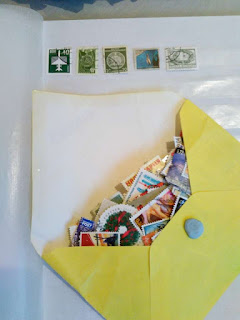
The boys decide to start W's stamp collection. The boys read and followed the instructions for how to add stamps to an album, categorised some of the stamps, asked their Nana for more stamps, soaked them off the envelopes and dried them. One stamp was for 500 Zimbabwean dollars so thinking they'd hit the big time, checked how much it was worth in GBP. A disappointing £1.10 - however K added to the value of the other UK stamps and was delighted to find it totalled over £13.

After stamps they decided to do some Reading Eggspress challenges and did comprehensions to earn animal cards and then traded them, with a discussion about which category of animal they were each collecting. The peacock was listed in flying birds and W wasn't sure peacocks could fly so he looked up a video to check they could.

They moved on to HomeByMe and worked on their houses, W made a pod house with all amenities based on a tiny footprint. K worked on the interior design of his office.

Time spent : 5 hours. Intervention : Zero, except for being a willing audience as they showed me what they had created and how to do the stamps.
So what's the formula for engaged, interested children? Luck is a big part of it. They had slept well, eaten a good breakfast and were in a chipper mood. We've had a good week. This keeps brotherly bickering to a minimum and created an atmosphere conducive to getting on with stuff. Rules are vital. If there wasn't a rule that we don't play computer games til the end of our school day then I'd have been reporting 5 hours of Minecraft or CrossyRoad. Environment helps. The kitchen was (relatively) tidy for a change and I'd shuffled some activities they might have forgotten about into sight - like how the supermarket guys rotate the fruit so the oldest is at the front.

There's a knack too, to intervening and directing just a few moments before everything descends into chaos. The active learning utopia has a limited shelf life; being self-driven is tiring and after a while you need someone else to take the reins, or provide snacks, or both. Balance is the key; both days we did formal literacy and maths after lunch.

Most of the discussions I read about this type of spontaneous/ free/ self-driven learning are play based and sadly that tends to mean the discussion is restricted to the under 5s. What a shame. Play, at any age, presents some of the best opportunities for analysis, planning, resilience, creativity and team work.

When learning is deep, relevant and active you can't tell where play stops and learning begins.

Monday, 3 October 2016

Screw the Plan

The timetable at the end of last week was a joke.

The lure of a website offering room and home design was too strong. Over the last few days the boys have spent hours designing and building. K has decided he wants to be an architect. One half of me is beating itself up for failure to teach conjunctions - the other is applauding itself for the spontaneous pursuit of an activity which is the pinnacle of the home ed freedom-to-learn philosophy.

Home.By.Me was the best site I found for flexibility and cost as you're allowed 3 free projects once registered. There's a Google login option and no limit to the size of each project so the boys have set up three 'worlds' and each one is focussed on a different type of building. You've got 2D and 3D views to play with.

So far the boys have created a mansion, flat, dream bedroom, cafe, pub, dorms, storage facilities, offices, playrooms...

For 3D spatial awareness this is a superb bit of kit and there are lots of ways to use this software to link to other curriculum areas - we might try some of these over the next few weeks :


  • Design a room on a fixed budget (research costs of items, spreadsheets & budgeting)
  • Recreate a room in our house on HomeByMe (maths skills - measurements)
  • How much paint / carpet do we need? (maths skills - working out area, rounding up)
  • Build a house/room only using items from <period in history> (history)
  • Design a house with tessellating rooms (maths)
  • Decorate a room using primary colours / complementary colours / etc (art & design)
  • Build a house of size X which can house at least X people with basics only (current affairs, displacement, ethics)
  • Design a maze (logic, maths)


Tuesday, 10 May 2016

Turning Negatives into Positives

K wanted proof that subtracting a negative number is the same as adding. The rule is clear cut but I was failing to convince K. There were raised voices and it was not fun.

Luckily MathsIsFun delivered on its promise and rescued us from a mother-son rift.

I went with their hot air balloon example which has the added bonus of reinforcing the number line concept.


My hot air balloon looks like a flower pot (art is not my thing) but the idea is sound and it works like this:

The orange circles are balloons, worth +1. The grey are weights, worth -1.

  • Start with the balloon pointing to zero then remove balloons (subtract a positive) or add weights (add a negative) to make the balloon drop. 
  • Add balloons to make it rise (add a positive).
  • Remove weights to show how subtracting a negative results in the balloon rising (a positive).

It's an effective way of proving to a 9 year old that taking away a negative can make a positive and there was a bonus bit of craft work preparing the number line and stamping out the circles.

Fabulous ideas from : http://www.mathsisfun.com/positive-negative-integers.html